

Mercury Dime (1916-1945)
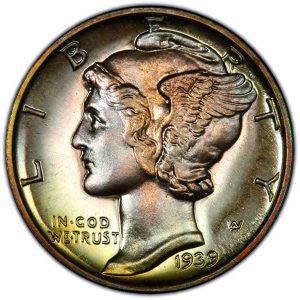
Obverse (Front) Design
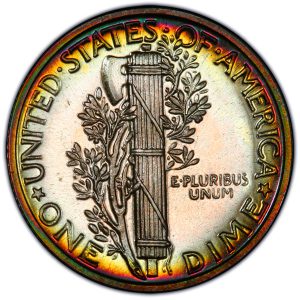
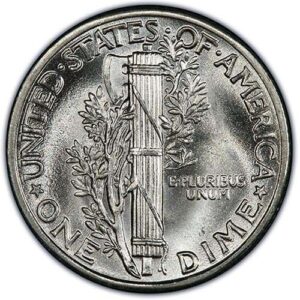
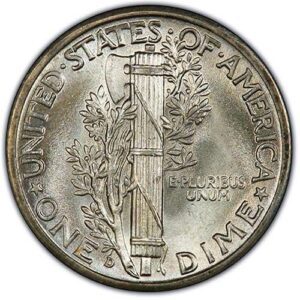
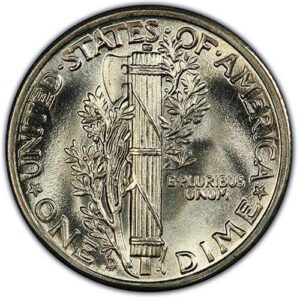
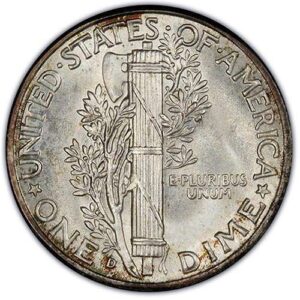
Reverse (Back) Design
Coin Specifications
Date Range
Denomination
Designer / Engraver
Mints
Composition
Precious Metal Content
Weight
Diameter
Edge
Mintage
History & Background
The Mercury Dime is officially called the Winged Liberty Head dime. People call it the Mercury dime because the winged cap looks like the cap of the Roman god Mercury, but the figure is Liberty. It was designed by Adolph A. Weinman, who also designed the Walking Liberty half dollar.
The coin was made from 1916 until 1945, when it was replaced by the Roosevelt dime. The 1916-D dime had a very low mintage and is the best-known key date.
Collectors look for the Full Split Bands (FSB) designation, which means the two center bands on the fasces on the reverse are fully separated.
Collecting Tips
- Look for the FSB designation on the reverse; it adds a premium in higher grades.
- 1916-D, 1921 and 1921-D are the scarcer dates.
- All Mercury dimes are 90% silver, so even worn coins have metal value.
Photographs by Grade
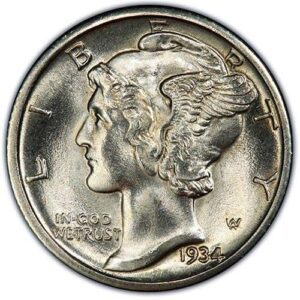
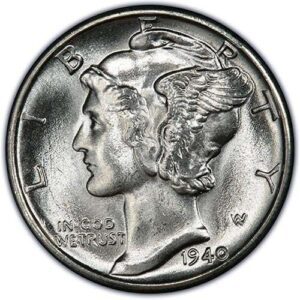
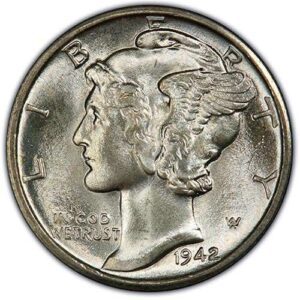
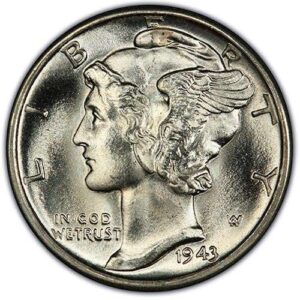
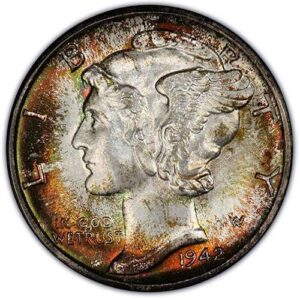
Mercury Dime (1916-1945) (1916–1945) — Photographs by Grade
MS64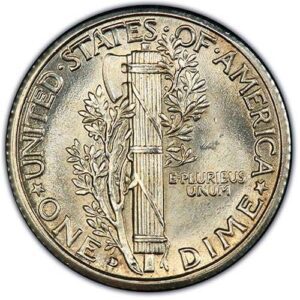 MS65
 MS66
 MS67
 MS68
Frequently Asked Questions about the Mercury Dime (1916-1945)
Is the Mercury Dime really Mercury?
No. The figure is Liberty wearing a winged cap, a symbol of freedom of thought. The nickname comes from its resemblance to the Roman god Mercury.
How much silver is in a Mercury dime?
About 0.0723 troy ounces of pure silver.
What does FSB mean?
Full Split Bands. It describes a coin whose fasces bands on the reverse are fully separated and sharply struck.
More Half-Dimes and Dimes

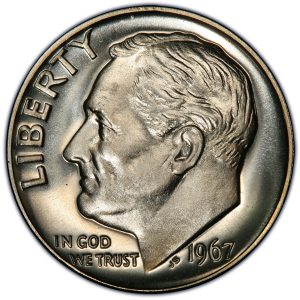
Roosevelt Dime (1946 to Date)
1946 to date · 10 Cents (Dime) · 1946–1964: 90% silver, 10% copper. 1965 on: copper-nickel clad
The Roosevelt Dime, introduced in 1946, honors President Franklin D. Roosevelt and was struck in 90% silver through 1964.
Buy and sell gold, silver and platinum with Marcus Metals
See live buy and sell prices on bullion bars and coins, or get a quote for your own gold and silver.