
Morgan Dollar

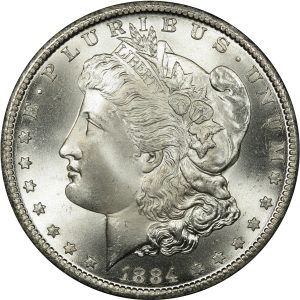
Obverse (Front) Design

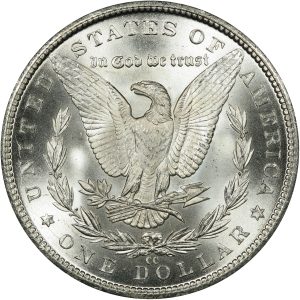
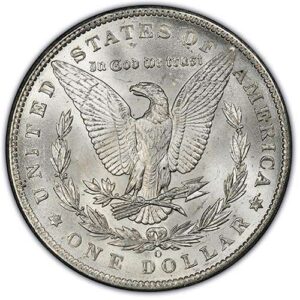
Reverse (Back) Design

Coin Specifications
Date Range
Denomination
Designer / Engraver
Mints
Composition
Precious Metal Content
Weight
Diameter
Edge
Mintage
History & Background
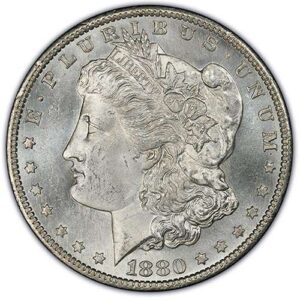
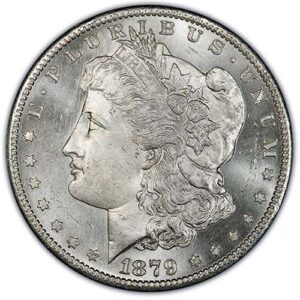
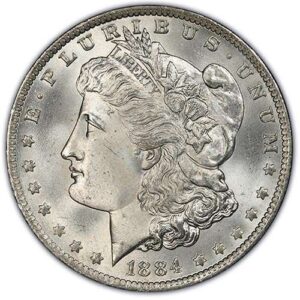
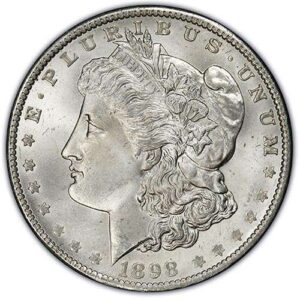
The Morgan Dollar was authorized by the Bland–Allison Act of 1878, which required the Treasury to buy large amounts of silver and turn it into silver dollars. It was designed by George T. Morgan, an English-born engraver who joined the U.S. Mint in 1876.
Morgan dollars were struck at Philadelphia, New Orleans, San Francisco and Carson City, and Denver added a single year in 1921. Production stopped after 1904 when the supply of silver bullion ran low. After the Pittman Act of 1918 led to the melting of more than 270 million silver dollars, the design was brought back for one more year in 1921.
Today the Morgan Dollar is one of the most popular coins to collect. Its size, its silver content and the history of the Carson City mint all add to its appeal.
Collecting Tips
- Carson City (CC) coins and low-mintage dates sell for much more than common dates.
- Avoid coins that have been cleaned, which leaves dull, scratched surfaces.
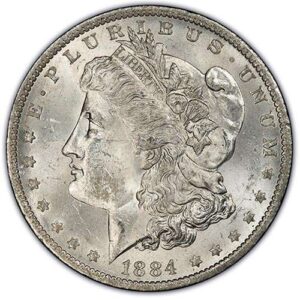
- Look closely at the cheek and hair for wear, which is how grade is judged.
- Buy certified coins for higher-priced dates and grades.
Photographs by Grade


Morgan Dollar (1878–1921) - Photographs by Grade
MS63
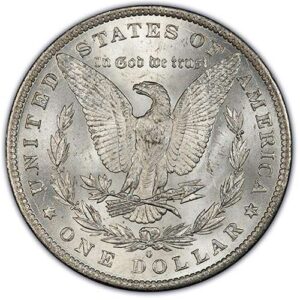
MS64
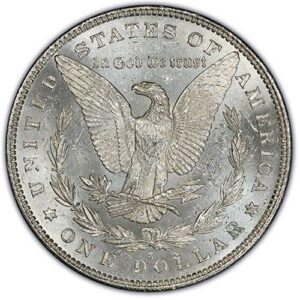
MS65
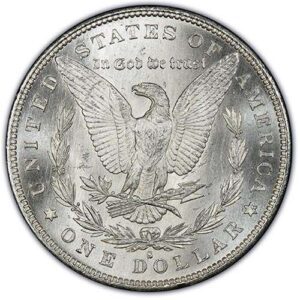
MS66
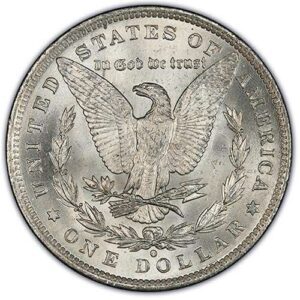
MS67
Frequently Asked Questions about the Morgan Dollar
How much silver is in a Morgan dollar?
Each coin contains about 0.7734 troy ounces of pure silver, because it weighs 26.73 grams and is 90% silver.
Which Morgan dollars are the most valuable?
Carson City (CC) coins, low-mintage dates such as 1893-S, and coins in high mint-state grades are usually the most valuable.
When were Morgan dollars made?
From 1878 to 1904, and again in 1921.
More Dollars

American Innovation Dollar
2018–2032 · 1 Dollar · 88.5% copper, 6% zinc, 3.5% manganese, 2% nickel
The American Innovation Dollar program issues dollar coins honoring innovation and innovators in each state, territory and the District of Columbia.

Draped Bust Dollar
1795–1803 (1804 restrikes later) · 1 Dollar · 89.24% silver, 10.76% copper
The Draped Bust Dollar, struck 1795 to 1804, was designed by Robert Scot and includes the famous 1804 dollar.

Eisenhower Dollar
1971–1978 · 1 Dollar · Copper-nickel clad (circulation); 40% silver (some collector issues, 1971–1974)
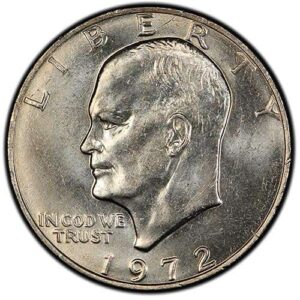
The Eisenhower Dollar, struck 1971 to 1978, honors President Dwight D. Eisenhower and was the last large-size dollar coin made for circulation.

Flowing Hair Dollar
1794–1795 · 1 Dollar · 89.24% silver, 10.76% copper
The Flowing Hair Dollar, struck in 1794 and 1795, was the first silver dollar made by the United States Mint.

Buy and sell gold, silver and platinum with Marcus Metals
See live buy and sell prices on bullion bars and coins, or get a quote for your own gold and silver.