

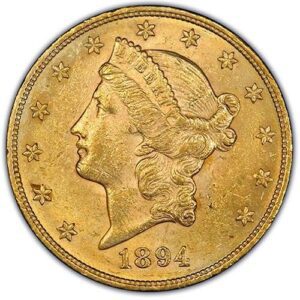
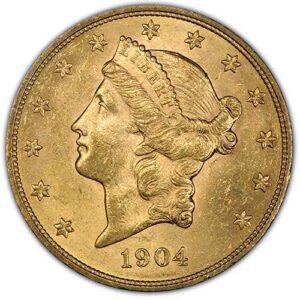
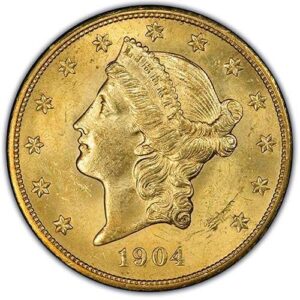
Liberty Head $20 Double Eagle

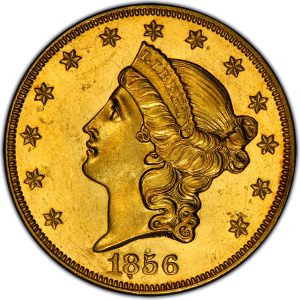
Obverse (Front) Design

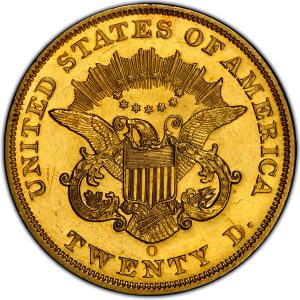
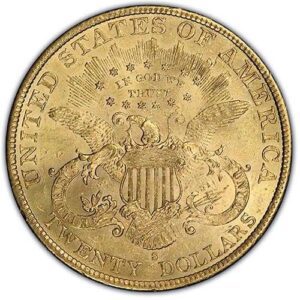
Reverse (Back) Design

Coin Specifications
Date Range
Denomination
Designer / Engraver
Mints
Composition
Precious Metal Content
Weight
Diameter
Edge
Mintage
History & Background
The Liberty Head Double Eagle was authorized by the Act of March 3, 1849, the same law that created the gold dollar. California gold had created a need for a large gold coin. It was the largest United States gold coin made for regular use and was designed by James B. Longacre.
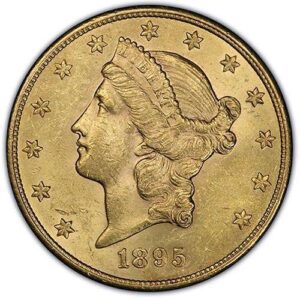
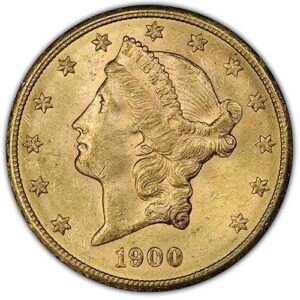
The coin is divided into three types. The first type (1850–1866) has no motto. The second type (1866–1876) adds IN GOD WE TRUST and the abbreviation TWENTY D. The third type (1877–1907) spells out TWENTY DOLLARS.
Double Eagles were struck at Philadelphia, San Francisco, New Orleans, Carson City and, late in the series, Denver. They were used widely in international trade and in bank holdings. The design was replaced by the Saint-Gaudens Double Eagle in 1907.
Collecting Tips
- Common dates in lower grades are often priced close to their gold value.
- Carson City and New Orleans coins are scarcer and carry premiums.
- Buy certified coins for any higher-priced date or grade.
- Check the type (I, II or III), since the three types are priced differently.
Photographs by Grade


Liberty Head $20 Double Eagle (1849–1907) - Photographs by Grade
AU58
MS60
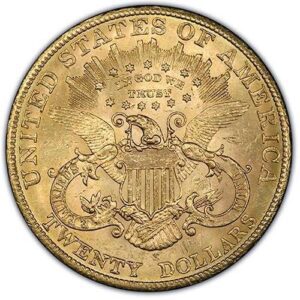
MS61
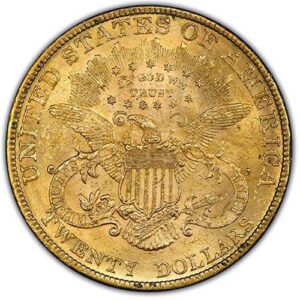
MS62
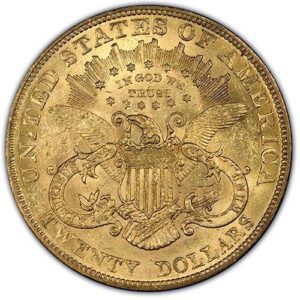
MS63
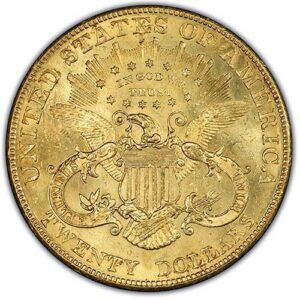
Frequently Asked Questions about the Liberty Head $20 Double Eagle
How much gold is in a Liberty Head double eagle?
About 0.9675 troy ounces of pure gold.
What are the three types?
Type I (1850–1866) has no motto. Type II (1866–1876) has IN GOD WE TRUST and TWENTY D. Type III (1877–1907) reads TWENTY DOLLARS.
Which mints struck it?
Philadelphia, San Francisco (S), New Orleans (O), Carson City (CC) and, in 1906 and 1907, Denver (D).
More Gold

$4 Stella
1879–1880 · 4 Dollars (pattern) · 85.7% gold, 4.3% silver, 10% copper
The $4 Stella was a pattern gold coin from 1879 and 1880 made to test a proposed four-dollar piece; it was never struck for…

Capped Bust $2.50 Quarter Eagle
1808–1834 · 2.50 Dollars · 91.67% gold, 8.33% silver and copper
The Capped Bust Quarter Eagle, struck 1808 to 1834, was designed by John Reich and was made in several sizes.

Capped Bust $5 Half Eagle
1807–1834 · 5 Dollars · 91.67% gold, 8.33% silver and copper
The Capped Bust Half Eagle, struck 1807 to 1834, was designed by John Reich and was made in several sizes.

Classic Head $2.50 Quarter Eagle
1834–1839 · 2.50 Dollars · 89.92% gold, 10.08% silver and copper
The Classic Head Quarter Eagle, struck 1834 to 1839, is a smaller gold coin from the era of the 1834 coinage reform.

Buy and sell gold, silver and platinum with Marcus Metals
See live buy and sell prices on bullion bars and coins, or get a quote for your own gold and silver.
