
Buffalo Nickel (1913-1938)
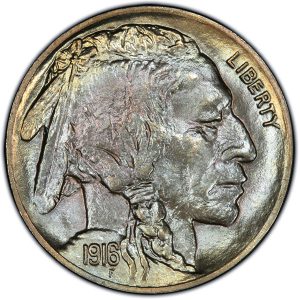
Obverse (Front) Design
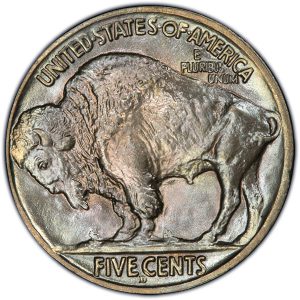
Reverse (Back) Design
Coin Specifications
Date Range
Denomination
Designer / Engraver
Mints
Composition
Precious Metal Content
Weight
Diameter
Edge
Mintage
History & Background
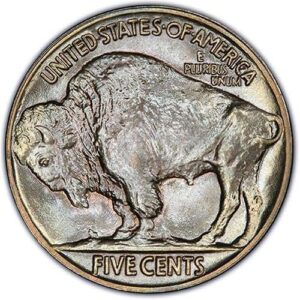
The Buffalo Nickel was designed by sculptor James Earle Fraser and replaced the Liberty Head nickel in 1913. Fraser said the portrait was a composite of several Native American men he had met. The reverse shows an American bison.
The first design, known as Type 1, had the bison on a raised mound with the denomination below it. It was changed within the first year to Type 2, with a flat ground line, because the denomination wore off too quickly.
The date on the coin was also raised and wore away quickly. Well-struck coins with clear dates are harder to find. Some well-known varieties include the 1937-D three-legged buffalo and the 1918/7-D overdate.
Collecting Tips
- Check that the date is fully visible; coins with worn-off dates are worth much less.
- Learn the key varieties, such as the 1937-D three-legged buffalo.
- Be cautious with expensive varieties, since altered coins are common.
Photographs by Grade
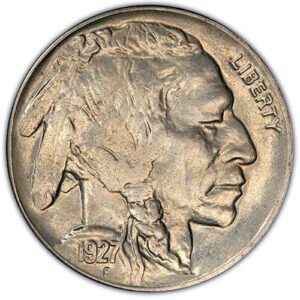
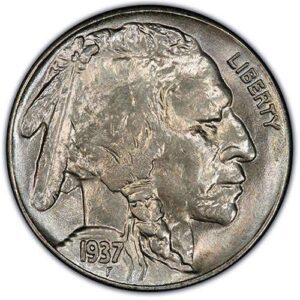
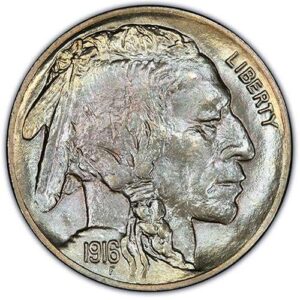
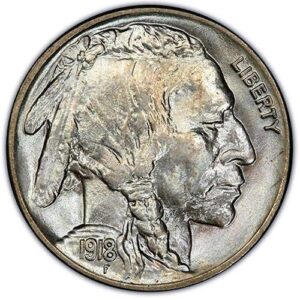
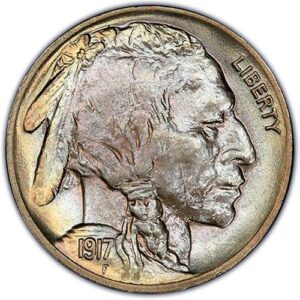
Buffalo Nickel (1913-1938) (1913–1938) — Photographs by Grade
MS64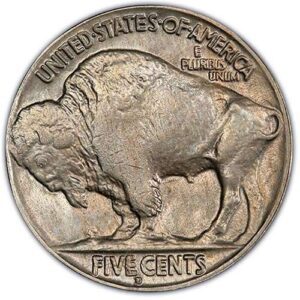 MS65
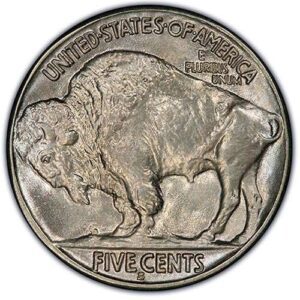 MS66
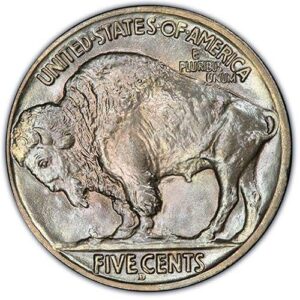 MS67
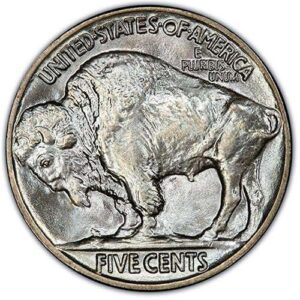 MS68
Frequently Asked Questions about the Buffalo Nickel (1913-1938)
Why is it called a Buffalo Nickel?
The reverse shows an American bison, often called a buffalo.
What is the three-legged buffalo?
A famous 1937-D variety where one of the buffalo's legs is missing because of a die polishing error.
Is the Buffalo Nickel silver?
No. It is 75% copper and 25% nickel.
More Nickels

Jefferson Nickel (1938 to Date)
1938 to date · 5 Cents (Nickel) · 75% copper, 25% nickel (1942–1945 wartime issue: 56% copper, 35% silver, 9% manganese)
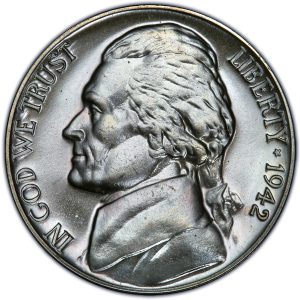
The Jefferson Nickel, introduced in 1938, shows Thomas Jefferson and his home Monticello. Wartime issues from 1942 to 1945 contain 35% silver.
Buy and sell gold, silver and platinum with Marcus Metals
See live buy and sell prices on bullion bars and coins, or get a quote for your own gold and silver.